Author: Silke Landtwing, Manager Corporate Communications, Leister Switzerland
Maybe you feel the same way I do. When I hear the word igloo, I immediately think of lots of ice and snow, Arctic, Canada, Greenland, Siberia, polar bears, sled dogs and Inuit. I then asked myself, "How do the Inuit actually build their igloos?" I found the answer in the well-known "Sendung mit der Maus" (German only).
More about "Sendung mit der Maus"
As it is explained vividly in the video, the Inuit first check the condition of the snow or ice. To do so, they cut out a "snow brick" with a knife. If the snow is firm enough and suitable to build an igloo, they draw a circle in the snow to show how big their igloo should be. Then they cut out more snow bricks inside this circle and build them up in an igloo shape all around. This way, the floor inside the igloo is lower than the surrounding area, which increases the stability of the igloo and provides more protection in the event of a snowstorm.
Igloo building in the Swiss mountains
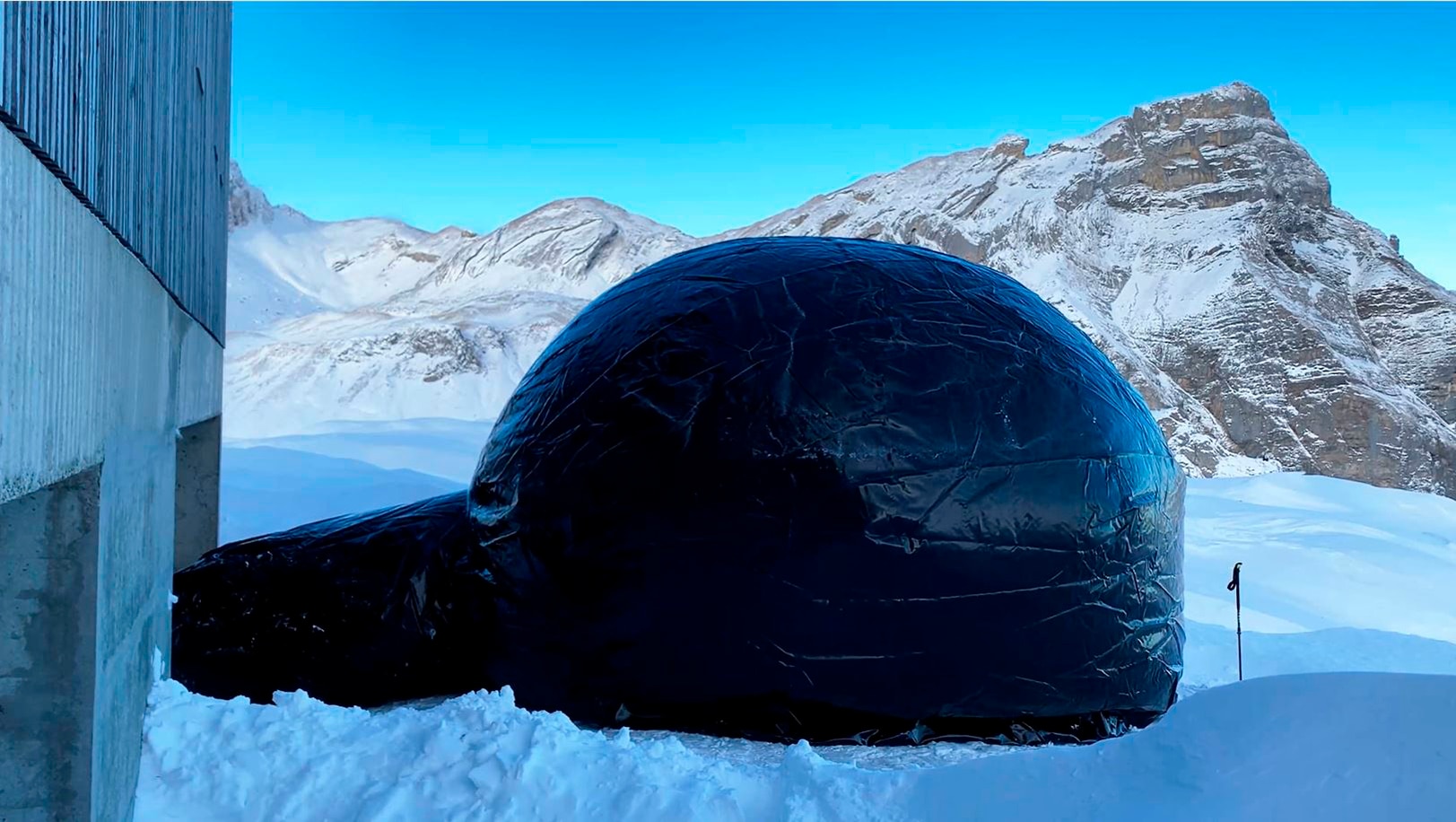
If we wanted to build an igloo here in the Swiss mountains as a stylish snow hotel or for a particularly cool fondue dinner, we probably lack the solid snow ground that the Inuit find in the Arctic. In addition, our igloos should have a lot of space and be quite large. That's why we need another solution with the help of Leister. Product manager Lukas Ineichen and engineer Urs Schmid, who is particularly well versed in welding technical textiles, tells us exactly how we can build Igloos in Switzerland.
How did you come up with the idea of welding an igloo mold?
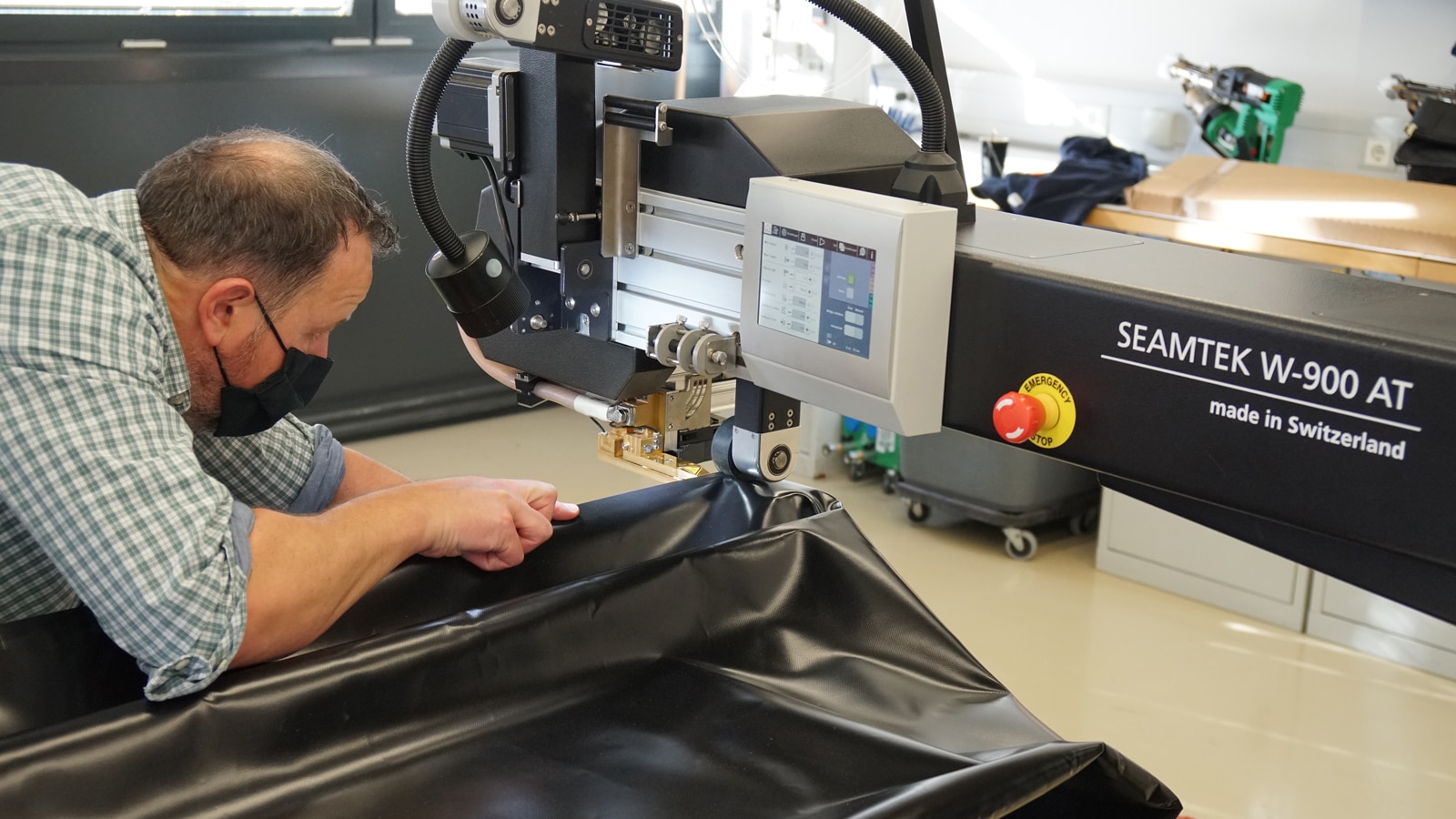
Lukas: "I always wanted to build an igloo and spend a cozy evening in it with friends. I knew that my colleague Urs from the TEX business line is experienced at producing inflatable, 3-D shapes with our SEAMTEK welding machines. After some thinking, I asked him if it was possible to weld an igloo shape and then our project was born."
Urs (smiling): "Of course, I immediately answered Lukas' question with 'yes' because our SEAMTEK W-900 AT is ideally suited for producing such 3-D objects. We started planning right away, with the design and shape of the mold, procuring the material and cutting it to size. In no time at all, we had all the parts together for welding."
Are there many other 3-D objects or inflatables that can be welded with the SEAMTEK?
Urs: "Yes, of course. For example, inflatable boats, inflatable tents, inflatable advertisements like archways at sporting events, structures for emergency tents, inflatable bouncy castles for children, emergency slides for airplanes, lifeboats for ships and much more."
Back to your igloo mold, have such igloo molds been made for a long time or is this a new idea?
Urs: "Igloo molds like this have been on the market for about 15 years. They are becoming more and more popular, whether for private use or for commercial use such as bars, restaurants or as hotel rooms."