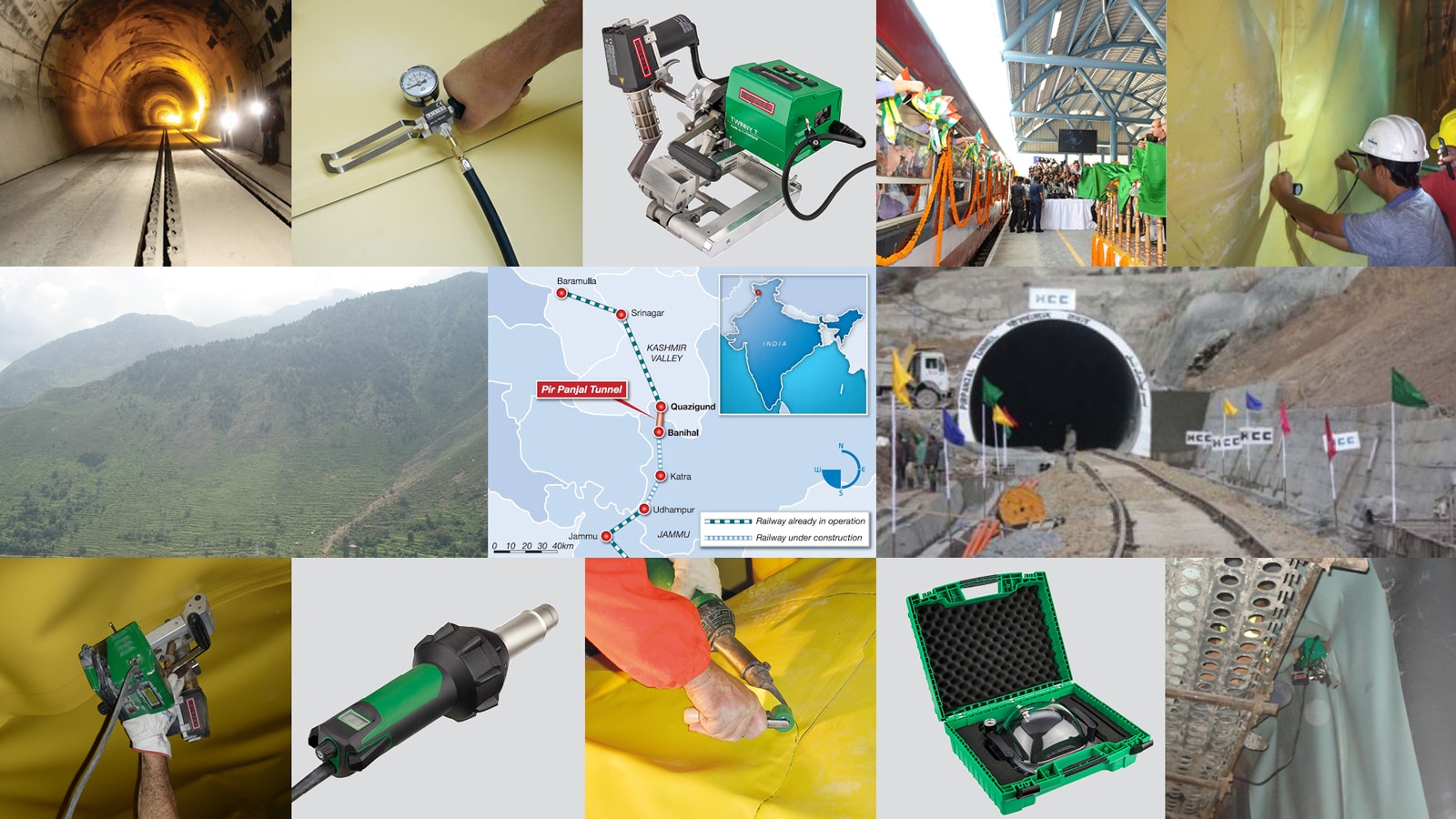
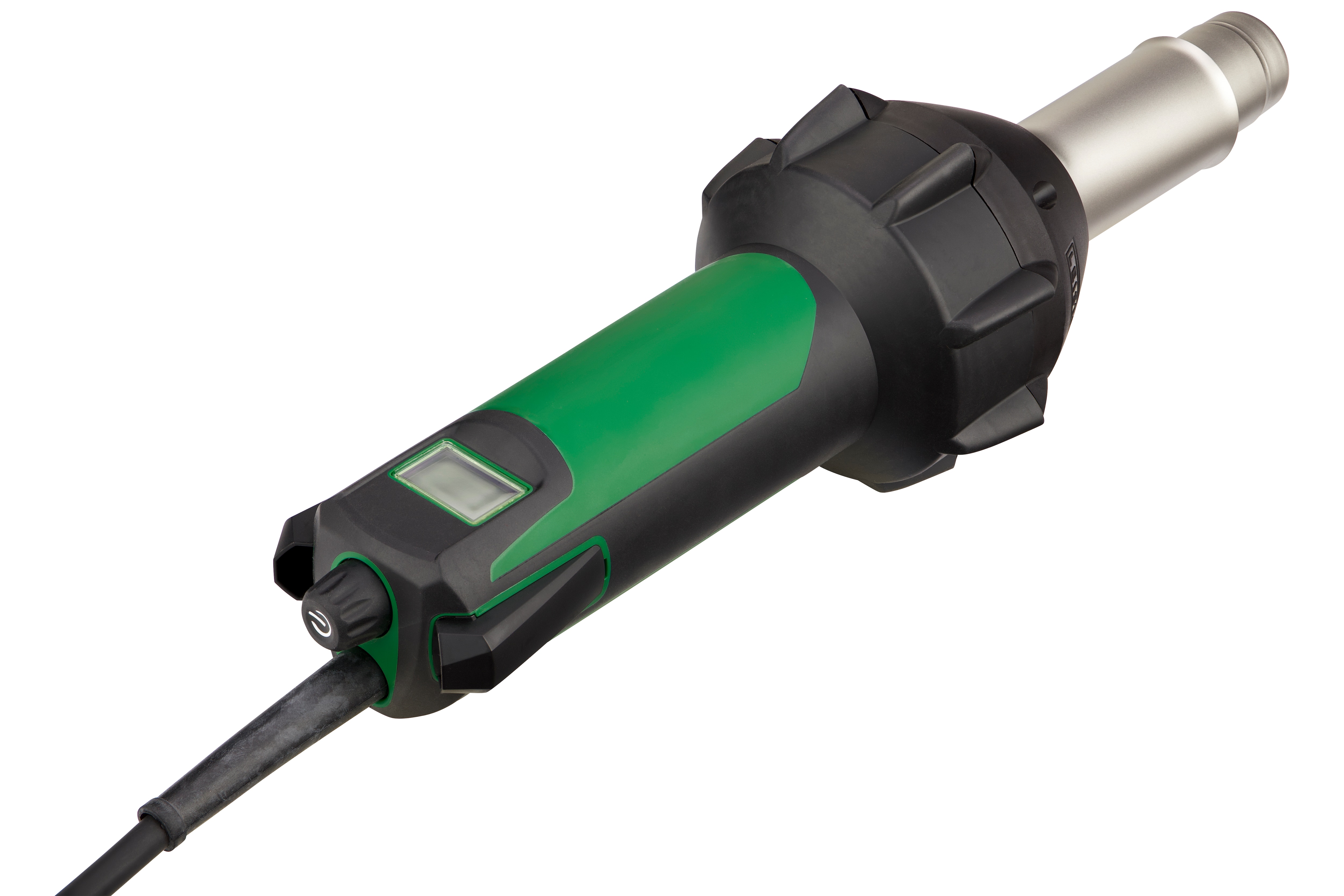
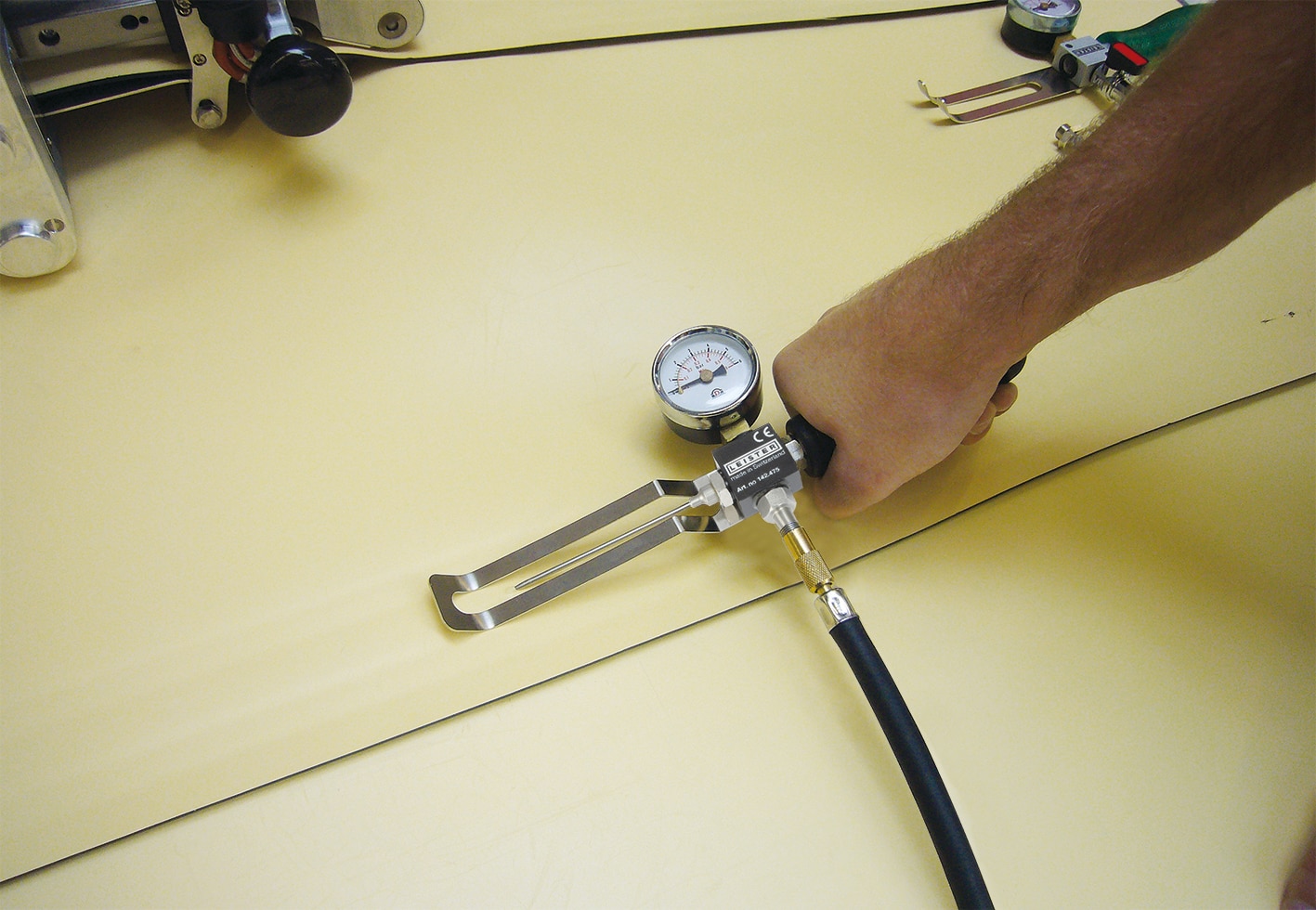
After the PVC geomembranes have been welded together, they are tested with Leister testing equipment such as B. the Test Needle tested whether the welds are tight.
Arun Kumar, General Manager of Leister India, is proud that Leister is involved in this important project.
Figures and costs
The total cost of the project is around 280 billion Indian rupees (just under $4 billion USD).
Of this amount, around 220 billion Indian rupees (just under $3 billion USD) have been budgeted for the section from Katra to Banihal alone, which is a particular challenge in this project due to its complexity. This is because the route of this third and final project section comprises a total of 37 tunnels with a total length of 163 km / 101.3 mi (various main tunnels with a total length of 97 km / 60.3 mi and escape tunnels with a length of 66 km / 41 mi).
Project status
The entire project was divided into three phases due to its geological challenges:
- Phase 1: Quazigund-Baramulla (118 km / 73.3 mi) and Banihal-Quazigund (18 km / 11.2 mi) - commissioned in June 2013
- Phase 2: Udhampur to Katra (25 km / 15.5 mi) - in operation since July 2014
- Phase 3: Katra to Banihal (165 km / 102.5 mi) - to be completed by March 2021
In October 2019, about two thirds of the 326 km / 202.6 mi long Jammu-Udhampur-Srinagar-Baramulla railway line was completed. The last section, which is still under construction, is a 111 km / 69 mi stretch between Katra, a Hindu pilgrimage town near Jammu, and Banihal on the slopes of the Kashmir Valley.
The section for Katra-Banihal is considered the most difficult in the history of engineering in India
The section from Katra to Banihal (Phase 3 of the project) is considered the most difficult in the history of Indian engineering. It includes the construction of 27 bridges. These include the 1315 m / 4314.3 ft. long and 359 m / 1177.8 ft. high Chenab Bridge, which will be the highest railway bridge in the world when completed. There are also 37 tunnels, one of which will be the longest tunnel in Asia with a length of more than 12 km / 7.5 mi.
The tunnels will be equipped with state-of-the-art ventilation systems. Provisions have been made for parallel escape tunnels in accordance with international standards, which will be connected to the main tunnels at regular intervals by cross-connections to facilitate rescue in an emergency.
Outlook
If the entire railway line is completed as planned, trains from New Delhi and Srinagar will travel to the Kashmir Valley in just 14 hours, starting in 2022.